
Who is thinking you? It may seem like a queer question given
that most of us believe that we are the masters of our own brains and actions.
But, neuroscience, the teachings of ancient wisdom traditions, and perspectives
from shamanism would advise us otherwise. Scientific studies have demonstrated
that there are actually three brains. The oldest, which we share with reptiles,
is where most of actions come from. Ancient wisdom streams, especially those that
include meditation, tie human thought, will forces, and our drives, in no small
part, to sources beyond our own mental apparatus and gifts.
Part of the answer may be that—not only do we share the most “primitive” part
of our brains with our animal ancestors—but it appears from cognitiveapproaches to archeology (represented by the like James L. Pearson, Colin
Renfrew, Ezra B.W. Zubrow, and Steven Mithin), that we haven’t changed that
much as a species for the last 100,000 years. Anthropologist, Jared Diamond,
author of “The World Until Yesterday”: What We Can Learn From Traditional
Societies” says that one of the reasons we are interested in so-called
“tribal”, traditional, non-Western societies or as he calls us WEIRD (Western
Educated Industrial Rich Democratic), is that we are closer to them than we can
imagine, even dressed up as we are in our business attire and wearable
technology.
In fact, we often accept all too willingly the advantages of
modern technology without a fuller understanding of what may be lost in the
process. Diamond goes on to assert that social bonds are an advantage that
traditional societies have which is being lost by technology-dominated
cultures. In a previous post, social media was cited as creating a loss of intimacy
that would make personal contact worth more in the future than gold. John A.
Livingston, a professor of environmental studies, goes further to say that
dependence on technology “has made us not merely the servants of our own
technology, but one of its products.” Anyone who has not checked his or her
social media profile settings on Facebook or their other favorite social
network should be aware that if you’re opting in, you are the data. That
said, there is data and then, there is data—as
anyone who has meditated has experienced.
One of the first things that occur in meditative states is
the flurry of incoming and ongoing thoughts. In Zen and other Eastern
traditions, this has been called the “monkey mind” because thought seems to be
produced randomly, sometimes in a ramble that appears as if out of nowhere
without effort—like a brain swinging from treetop to treetop in the jungle of
mind. Shamanic techniques as well as meditative ones represent time-tested
technologies that help us attempt to saddle this runaway horse of thought, so
that we, the riders, can better direct their course and as a result, our
intention, and action. As mystic teacher, Gurdjieff, once prompted—we must ask
ourselves: “Who is the horse and who is the rider?” Unfortunately, for anyone
who has tried, it doesn’t come easily. One reason we’ve now learned from neuroscience
is that most decision-making—estimated at an incredible 95%—occurs below the surface of conscious thought.
Neuromarketing, a relatively recent field that is an
offshoot of applied “neuroscience meets sales”, points to the target being the
oldest vestige of our connection with all animals that have a spine—the
so-called “reptilian” brain that sits atop the brainstem. This seat of the
classic “fight or flight response,” is a kind of binary switch, which identifies
whether outside stimuli are dangerous or safe. It also helps identify whether sensory
input represents the possibilities of food or sex. A later development, the second
part of the brain system is the mid brain, which controls emotional response.
The latest addition, and the one which truly sets us apart from the animal pack,
is the frontal cortex, which introduced into the system what might be called in
the language of the HAL 9000 computer, our “logic center”. Among other things,
it’s responsible for scenario planning, which differentiates us from other
animals both in the hunt as well as availing itself to business strategy.

Graphic courtesy of salesbrain.com
Here, science has mapped what ancient tradition has known for a very long time. Gurdjieff, who represented age-old wisdom streams from the Sufi and Tibetan to the Siberian and Ancient Egyptian, referred to humans as “three-brained beings” in his magnum opus, “All and Everything.” It leads one to believe that the ancients were onto something that might be put to good use today in the modern world and to elevate the business game. In fact, neuromarketing labs already exist and are using technology like fMRI scanners to locate specific brain functions for brands to use in marketing to us. Companies like Coca Cola, Disney, and the CBS Television Network, have them and CBS’ is interestingly located close to the Las Vegas Strip where they recruit their subjects who are hopefully not too drunk a sample.
Here, science has mapped what ancient tradition has known for a very long time. Gurdjieff, who represented age-old wisdom streams from the Sufi and Tibetan to the Siberian and Ancient Egyptian, referred to humans as “three-brained beings” in his magnum opus, “All and Everything.” It leads one to believe that the ancients were onto something that might be put to good use today in the modern world and to elevate the business game. In fact, neuromarketing labs already exist and are using technology like fMRI scanners to locate specific brain functions for brands to use in marketing to us. Companies like Coca Cola, Disney, and the CBS Television Network, have them and CBS’ is interestingly located close to the Las Vegas Strip where they recruit their subjects who are hopefully not too drunk a sample.
In their classic text on the subject, “Neuromarketing:
Understanding the ‘Buy Button’ in Your Customer’s Brain”, Patrick Renvoise and Christophe Morin provide a helpful analogy as to how these three brains all fit
together: You’re out hiking and come across something on the ground that looks
like a snake. Your reptilian brain immediately kicks into gear and you jump
back. Your logic center takes a closer look from afar and sees that it’s not a
snake at all, but a broken stick that isn’t moving. The midbrain then directs
you to wipe your brow, “Phew, that ‘snake’ was only a stick. Man, am I lucky!”
What does this mean specifically for marketing and sales?
Quite simply, that in order to sell, you need to appeal to what Renvoise and
Morin call the “Salesbrain.” In other words, you need to appeal to the “reptilian”
part of the brain and make it easy for your customer to say “yes.” There are
many sales books about “getting to ‘yes’”, but not as many about the power of
its opposite. Again, an ancient practice from India that goes back at least
8000 years—the art of chanting mantras or power words in meditation—links the
idea of belief to sound.
Dr. Andrew Newberg and Mark Robert Waldman in “Words Can
Change Your Brain”, point out that the most dangerous we use is the word
“no”, which literally causes the brain to go into stress mode when it is heard. So, Norman Vincent Peale had a point when he dedicated his classic volume
to “The Power of Positive Thinking.” Newberg and Waldman founded the field of
Compassionate Communication techniques for leadership based on their findings
in neurology and offer practical techniques for using language to rewire the
brain and more effectively communicate.
In “Rogue Primate”, John A. Livingston, goes further to
suggest that we invent technology to get us closer to those things we have lost
during the course of becoming civilized, specifically the world of nature. Gretel
Erlich, who has dedicated her life to writing poetically about the natural
world says, “Nature is the only true artist, and we are its apprentices.”
Yossi Ghinsberg’s account of his “apprenticeship” at the
hand of the jungle, itself, and survival after being lost for weeks in the
Amazonian rainforest provides even more foundation for the wisdom in having access
to our “tribal mind”. At least, he suggests, we should sense our inner GPS
based on knowing where we are and not just in relation to maps—which may be as
erroneous as Apple’s attempt at navigation—but with respect to natural celestial
events and nature’s compass. He codified the principles which helped him
survive in “Laws of the Jungle: Jaguars Don’t Need Self-help Books—Profound
Lessons Inspired by an Extraordinary Story of Survival”.
In a previous post, “The Cave Mind Operating System”, I drew
some conclusions and hopefully offered a few practical lessons drawn from the
study of prehistoric rock art, its discovery in modern times, and contemporary theories
relating paintings that can be as old as 30,000 years ago to shamanism and
hunting magic.
What other lessons can we learn from studies of cognitive
archeology, neuromarketing, and behavioral science?
1)
SEEING IS USUALLY CLOSER TO BELIEVING, BUT WHAT
YOU SEE IS NOT NECESSARILY WHAT YOU GET
“Creating ways to keep us connected is…the central problem
of mammalian evolution,” according to neuroscientist, Dr. Mathew D. Lieberman. The
ability of the reptilian brain to determine threat is based on our being social
animals. But, social media doesn’t always do the job of keeping us connected;
despite how many “connections” you might have on LinkedIn, Facebook “friends”
or “followers” on Twitter. Sociological and anthropological studies of modern
cultures and tribal societies have shown that the maximum number of acquaintances
that it is possible for most normal brains to handle is 150, which is also the
average maximum size of a tribal unit.
“Face Time” is not just a Mac application. Social media and
technology have made in-person meetings more essential than ever and the human
face is definitely our social mask for those who have the ability to read it. Any good salesman
will also tell you that one of the goals of a retail shopping experience is to
get the product in the hands of a potential buyer. Possession is a psychological
state and ownership often starts with the feeling of touching the merchandise.
The bottom line is that social media aside, we still trust face-to-face
interactions more than virtual ones in our decision making, whether we recognize it
or not.
A Wall Street Journal study showed that
from job interviews to dating, humans make a decision as to whether they like
another person within a mere 20 seconds. Traditional business wisdom about
smiling, firm handshakes, eye contact, and proper attire hold water for the subconscious mind. Developing a working knowledge
of body language was popularized by negotiation experts like Gerard Nierenberg
and Henry H. Calero in late 1960’s and early 1970’s and is still relevant.
Emotions from friendliness to lying, flirtation to boredom, are written all
over the face, gestures, postures, and other forms of physical expression that
can be read like a book. It should be no surprise that Dan Zarella’s research
of over a million Facebook interactions show that over 60% of what is shared on
the social network are photos. His outstanding work is essential to understanding the science behind marketing.

Rudolf Steiner said that one could tell more about a man by
the way that he walked, than by any other method. The lesson is that we should
be wary that snap judgments are made both in person, and on a shared screen,
and it’s easier to workaround an initially unfavorable impression in person
than it is when the average amount of time that a user spends on a web page is
3-8 seconds and a face is blown up outsized in terms of its effect, the smaller
the screen gets. Given that there are now over two billion mobile phones
globally, the best practice is probably to use those initial seconds favorably
to “get the meeting.”
2) THE TRIBE ISN’T ALWAYS RIGHT
Much has been written about the creative power of
collaboration in this era of the “open organization” exemplified by the tech
startup with its common spaces, non-hierarchal structures and relaxed
management styles. It is also the foundation for the rule of democratic law in
contrast with dispute resolution in tribal societies where individuals involved
do not have representation, but usually know each other and resolve their
differences face-to-face.
It may then, seem counterintuitive, but the so-called
“wisdom of the crowd” isn’t always so wise at all times. Anyone who has run a
focus group has seen the lemming effect that often takes place
when an “alpha” participant becomes the effective group leader and sways
opinion while silencing outliers who might otherwise speak differently.
Despite Seth Godin’s popularization of the word “tribes” to
refer to market segments in the digital world, and the name of my blog, “Tribal
Media”, sometimes we need to avoid the cliff of groupthink and say, “Take me to
your leader”—which may, in fact, be you.
3)
SMOKE SIGNALS TAKE A LONG TIME TO GET THERE
One of the challenges that social media and digital
marketers often face is the question: “Where is the ROI.” Despite the many digital
marketing companies promising “virality”, the first rule of thumb is that
organic social marketing is usually slow growing, especially if it’s organic.
Also, there is a difference between ROI and “reach”.

Even in the television business, it’s never been proven—except on infomercials—that commercial spots are responsible for unit sales. It’s still all about awareness.
So, when you see a commercial about a detergent that makes a
family both clean and “happy” (as Don Draper would say), one is apt to remember
the product when you are walking down the supermarket aisle and spotting the same colors and branding. The
same is true for social media, except that the CPM or standard metric for
success has yet to be agreed on.
While clicks, uniques, social reach, and other terms have
been applied to mirror the conventions of offline mediametrics, "social" by
nature is a totally different animal because it is ideally a circle of
conversation that establishes value first prior to conversion to a sale.

A look at the chart above shows that Starbucks is sending out more "smoke signals" via Twitter than Coca Cola or Pepsi, and may be the reason why it represents a lifestyle brand as the beverage companies aspire to be. It doesn't take a brain scientist to see that Pepsi or Coke could up the ante by sending out more smoke signals or tweets to differentiate itself from its competitor.
4)
SOCIAL MEDIA AND TEXTING ARE THE NEW CAVE
PAINTINGS

Emoticons and social media network profiles can tell us a
lot about their owners. Emoticons arose not only as shortcuts, but because
images can convey emotion better than language. The rise and art of successful infographics
demonstrates the need to present the noise of data in a highly visual,
shrink-wrapped format. Brand logos are symbol systems that convey emotion,
value, and engender aspiration as well as create lifestyle clans of belonging. The
popularity of graffiti, with some of its practitioners considered artists in
their own right, is another indication of the need humans have to make marks in
time to define both establish identity and territory. Urban walls are a constant reminder
of this common thread binding prehistoric and modern societies.
Text is a similarly abbreviated language with its acronyms
and shortcuts. The desire to be in constant communication seems to be a mania
that requires the ability to encompass as much information in as short bursts
as possible. Where once the half hour sitcom and hour drama once ruled, short
form video is now a parallel universe that contributes to the 8+ hours a day
the average American spends on a screen of some kind.
But, texts and email fall short when compared with the lost
art of letter writing and epic poetry and are often subject to having their
meaning and/or tone misunderstood—and many times in unfavorable ways. Corporations are learning this the hard way and as a result of mis-steps in handling crisis communications, have enabled an expansive, digital reputation
management industry.
The result is going to be that long form writing will stand
out as a practice much in the same way that scribes were the only literate
people in Ancient cultures in Egypt and Mesopotamia, where the original oral traditions
predominated. If we do a deep dive into deep time, it’s easy to forget that
writing as such was only invented approximately 5200 years ago.

Slang wars and urban dictionaries aside, we’re going back to the future with the written word. The right word, spoken at the right time is still the most powerful medicine. Muscogee poet, Joy Harjo, wrote: “The sound of a voice will often reveal a map of destiny.” One only has to remember the wartime speeches of Winston Churchill, to know what she meant. Conversely, Marshall McLuhan pointed out that the rise of Hitler was due to his command of the radio broadcast as a propaganda tool and that had television been invented at the time, he would have been seen as the madman he was through the visual medium--and not risen to power.
On learning about the invention of the alphabet, Aristotle
was purported to have said, “There goes the neighborhood!” referring to the
inevitable loss of memory due to the faltering of oral tradition. What happens
when memory becomes storage in “the cloud” and messages like Vine videos are 6
seconds long, Snapchats disappear in 10 seconds, and the average YouTube video is watched for 2:46?
McLuhan also reports that St. Augustine was the only
person in medieval Europe who was capable of reading silently. When he recited
texts from memory, he was regarded as a magician. Those who have a command of
the written word will become a new future knowledge class and will have more
power than those who send the thousands of messages that trap us every day.
5)
MUSIC IS
CREATED IN THE SILENCE BETWEEN THE DRUM BEATS (AND NOTES)
If pictures are more effective than words to convey emotion,
then music trumps them both. Why then would we ask: “Where can we find the
silence?” A sage once said that before you speak, you should ask yourself, “Are
my words going to improve the silence?” How do we find the place where creative
energy comes from? With the proliferation of management books on innovation and
creativity that emphasize systems and methodologies, it’s always helpful to ask
a musician. No less an expert than Keith Richards cites that: “The silence is
your canvas.” Famously, when he was asked for a definition of jazz, Dizzy
Gillespie said, “It’s the silence between the notes.”

We exist in a media environment where the average American
receives over 3000 messages a day. Increasingly, this makes the pursuit of
silence next to impossible--and silence affords the moments where the creative mind can kick in and
allow for intuition and ideas to flow uninterrupted. We also live in a time
when the accidental nature of discovery and invention—in dreams, for example—is
not the goal.
“In daily life, because triumph is made more visible than
failure, you systematically overestimate your chances of succeeding,” observes
Rolf Dobelli. He sees much thinking about personal and professional success
suffering from what he calls “survival bias”. He reminds us that we should look
at the nature of how we overestimate the chances of our achievements by “visiting
the graves of once-promising projects, investments, and careers.” For every
best-selling book, he points out that we should count the thousands of unpublished
authors littering the publishing battlefield.
When creating, we need to always ask ourselves, “Are we ‘Man
the Toolmaker’?” as anthropologists have characterized our species. Or are we
more subject than ever to the idea that technology will save us time, and offer other efficiencies, which actually make us more “Tool the Man maker”? In many
respects, we need look no further than nature or the world of ongoing creation,
adaptation, and renewal for the answer.
Feedback is the way that nature learns, according to Tachi
Kiuchi former Chairman and CEO Emeritus of Mitsubishi Electric America and Bill
Shireman, in their 2002 book, “What We Learned In The Rainforest: Business Lessons from Nature.” Ethnologists are taught to listen rather than engage in
conversation and one of the most effective words to use in marketing messages
for social media engagement is “you.” The social web is dominated by
self-interest and in order to survive, thrive, and generate virality, it is
critical to serve the interest of the other first. The art of listening is
connected to the discipline of finding that inner silence where one’s inner
voice and agenda can be controlled in order to have a better understanding of
most business situations.
According to science writer and filmmaker, Jonnie Hughes, “Highly
social, brainy primates with time on their hands are able to watch the actions
of others and copy them…” The ability to imitate, therefore, is hardwired—it’s
actually called “the art of aping”, but it requires time—afforded when the mind
is disciplined and calm with the open-ness to be able to mirror the other.
Jeffrey Hazlitt, former CMO of Kodak, takes the notion a step further for
organizations as a whole in his now classic management book, “The Mirror Test”.
The search for silence will become an expanding effort
especially with generations that are input oriented rather than on output. At a
conference on the future of television, singer/actor/activist, Ruben Blades once
observed: “We will be the best informed generation to die of ignorance.” While
meditation and shamanism offer a variety of techniques for the seeker of the
kind of creative answers to be found in silence, we need to also be aware that
no matter how proficient sentient or sentiment savvy search engines become at
filtering data—or even the current trend of human curated search—there is a
cost and ultimately, you are being searched
as well.
6)
THE DIGITAL WORLD IS LIKE A JUNGLE AND A RADIAL CLOSED WEB ECO SYSTEM OF INTEGRATED NETWORKS
“What can business learn from nature?” pose Kiuchi and
Shireman. For starters, we have moved from an online world where destination
sites once ruled and cost marketers dearly in terms of the budgets necessary to
drive traffic and eyeballs to URLS, having now arrived at a web network, radial model. This model
is actually a mirror of how things work in nature. “The global integration of
networks creates a network ecology—literally, a place in which people can
gather, conduct business, share ideas, and build relationships. People will be
able to conduct their activities increasingly in the global network ecology—the
Infosphere,” says Michael Vlahos.


Diagrams based on and courtesy of Kiuchi and Shireman
The irony is that limits are also a key positive force that force adaptation and innovation in the rainforest. The lesson is that one should create more than one consumes. Kiuchi and Shireman suggest that profitability is linked to companies that are disciplined enough to use limits to “force (and) channel action toward the creation of value. Today, the notion of a value chain should be updated to be more of the “closed value web loop” that drives natural cycles of the seasons in the forest and in life. The true business “plan” starts when we ask ourselves what we value most.
Diagrams based on and courtesy of Kiuchi and Shireman
The irony is that limits are also a key positive force that force adaptation and innovation in the rainforest. The lesson is that one should create more than one consumes. Kiuchi and Shireman suggest that profitability is linked to companies that are disciplined enough to use limits to “force (and) channel action toward the creation of value. Today, the notion of a value chain should be updated to be more of the “closed value web loop” that drives natural cycles of the seasons in the forest and in life. The true business “plan” starts when we ask ourselves what we value most.
It may be helpful to keep in mind a perspective from the world's leading expert on ants, E.O. Wilson: "In a purely technical sense, each species of higher organism—beetle, moss, and so forth, is richer in information than a Caravaggio painting, Mozart symphony, or any other great work of art."
7)
THE BUSINESS WORLD IS A HUNT WHERE CHANCE AND
LUCK ARE MORE PREVALENT THAN THE BEST TRACKER
Thanks to original thinker, Nassim Nicholas Taleb, the term “black swan” is now well known
in the world of finance. A trader by profession, he originated the phrase to
describe unexpected events and the role of chance that more often than not are
responsible for the behavior of the markets despite the best-intentioned, most persuasive
predictions, analytics, and trading systems. In his collection of aphorisms, "The Bed of Procrustes", Taleb further states: "In science you need to understand the world; in business you need others to misunderstand it."
According
to Jared Diamond, Harvard would have avoided the crash of its endowment and
income during the 2008-9 worldwide financial meltdown if its “financial
managers…followed the risk management strategy of peasant farmers, who maximize
long-term time-averaged yields only insofar as that is compatible with
maintaining yields above a certain critical level.” Tell that to former Fed Chairman Alan Greenspan.
In
addition, Diamond points out that both traditional societies and Western
cultures “have a tendency to resort to rituals in situations whose outcomes are
hard to predict.” Whether it’s the superstitious behaviors of athletes, dowsers
looking for water or the mad graphs of systems traders, the unexpected seems to
be the only thing we can expect from a world designed for change. Being open to the
opportunities potentially offered through chance and uncertainty in addition to being
able to exercise our unique ability as thinking animals to create scenarios,
seems to be the best workable, hybrid strategy.
“The fact is that we’re actually living permanently in the
future and that’s what really worries me,” says Terry Gilliam, whose
forthcoming movie, “The Zero Theorem”, is a dystopia about a coder drowning in data. Seems
to be an emergent theme as a recent spate of movies may be trying to tell us. Whether
or not you think that traditional societal knowledge or ancient wisdom is
relevant, there’s a wave of films about survival—among them “Gravity”, “12
Years a Slave”, “American Hustle”, and “The Hobbit.” “Gravity” director,
Alfonso Cuaron, pointed this recent theme out on a recent episode of the
“Charlie Rose Show”. Despite the advantages of modern life, perhaps survival is
more imperative than ever if it is being expressed in so many mass dreams.
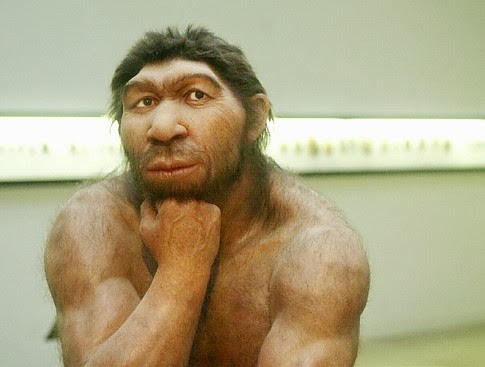
The idea of connecting ancient traditions and mysticism with
the business world may strike some as bad mojo or as controversial. Others
like Jared Lanier, who coined the phrase “virtual reality”, have become
Neo-Luddites and are warning us about the perils of accepting technology without knowing its potentially unfavorable consequences. We are not romanticizing tribal peoples who have their own
problems and have all but succumbed to modern ways. Certain practices of extant
traditional societies are brutal, especially with regard to women. But, Terence
McKenna had a point when he spoke of our times as an “Archaic Revival” where, to discover the cultural riches of techniques that have worked well enough to survive
thousands of years in our shared past, has the potential to save us from
repeating the future.
I'll be speaking about "The Business Shaman" and the Cave Mind Operating System at The British Museum on January 28th.

I'll be speaking about "The Business Shaman" and the Cave Mind Operating System at The British Museum on January 28th.



 Posts
Posts



